Corrugated Metal Roofing Installation in Athens, GA
The Wave Profile That Built Rural Georgia
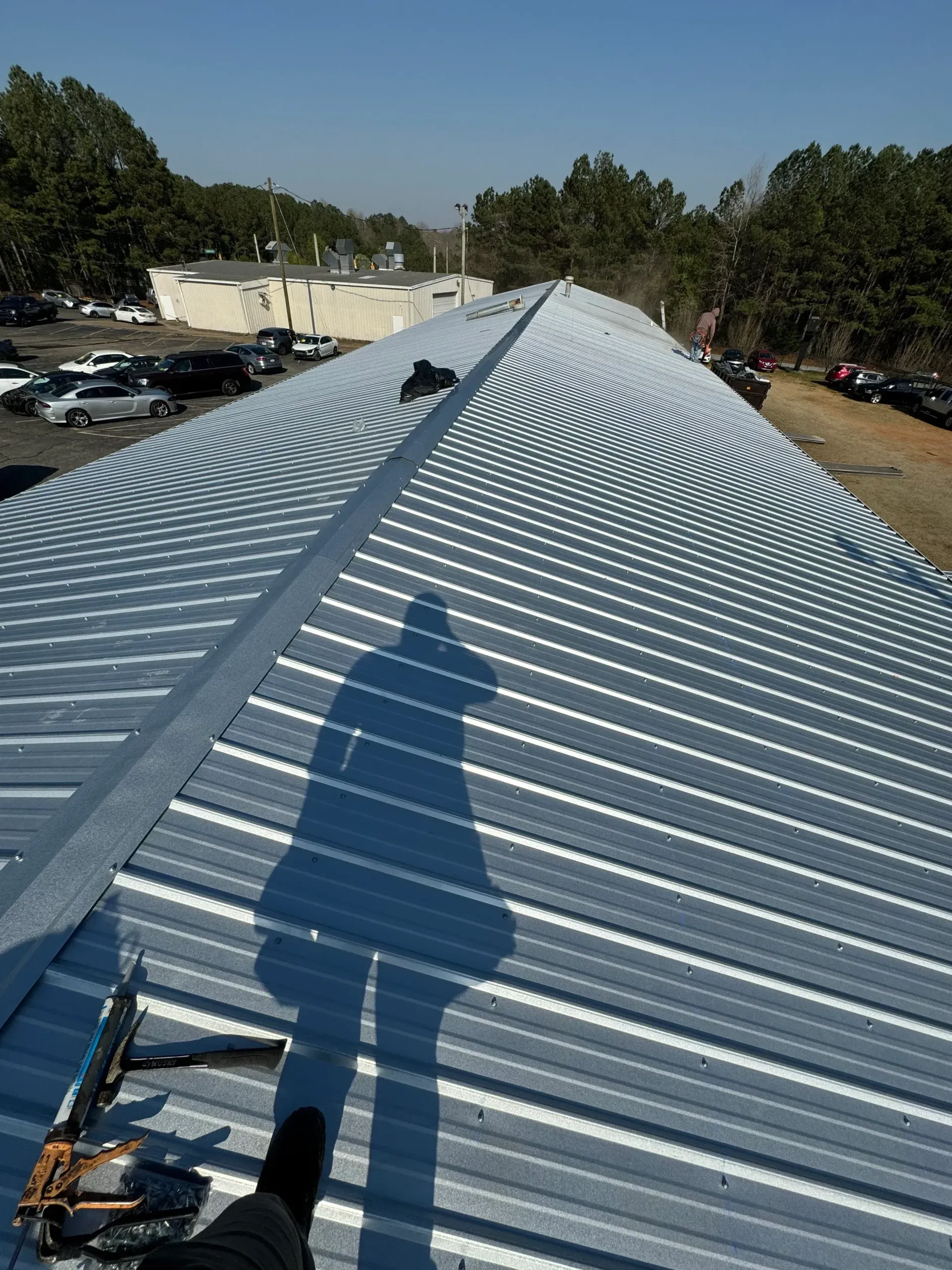
Few roofing materials have the history of corrugated metal. Its rolling wave profile has covered farm buildings, sheds, and country homes across Georgia for generations, and today it is just as likely to top a modern farmhouse, a backyard studio, or a covered patio. Corrugated metal roofing installation involves fastening these rippled panels directly to purlins or solid decking with sealed fasteners, overlapping each sheet so rain runs freely off the roof.
Around Athens, GA, property owners often choose corrugated metal for agricultural buildings, garages, pole barns, and porch roofs because the panels are lightweight, relatively economical, and quick to install compared with many other metal systems. The curves give each sheet strength, and painted or galvalume finishes help the roof resist the humidity and heavy storms common to the region. Since the fasteners are exposed, installation quality decides how well the roof performs, which is why we pay close attention to screw placement, washer compression, and the direction of every panel lap.
What Corrugated Panel Installation Involves
A corrugated project starts with confirming the roof structure. On barns and pole buildings, panels are often fastened to wood or steel purlins spaced to suit the panel gauge. On homes and enclosed structures, we typically install over solid decking with underlayment to add protection and help manage condensation.
Panels are laid starting opposite the prevailing wind so side laps face away from driving rain, and each sheet overlaps the next by the recommended number of corrugations. Fasteners with rubber washers go in at the pattern the panel calls for, followed by ridge caps, foam closures, and gable and eave trim. Panel ends are cut cleanly, and any drilling debris is swept off so it cannot rust on the finish.
Customers generally request this service for new outbuildings, replacing rusted panels on older barns, adding a porch or carport roof, or giving a house a rustic metal appearance at a lower cost than standing seam. It is also a popular way to roof sheds, kennels, and equipment covers.
Signs Your Corrugated Roof Needs Replacing
Older corrugated roofs tend to show their age in these ways.
- Rust spreading from panel edges, laps, or around screws, especially on older galvanized sheets without paint.
- Fasteners backing out or rubber washers cracking, leaving open holes where rain can drip straight through.
- Panels lifting at the eaves or ridge after strong winds because purlin connections or fasteners have loosened.
- Condensation dripping inside barns or shops where no underlayment or vapor control was originally installed.
- Dented or bent sheets from hail or falling limbs that no longer lap tightly against neighboring panels.
- A new pole barn, carport, workshop, or porch that needs an affordable, durable metal roof installed.
Reasons to Choose Corrugated Metal
- Budget Friendly Metal: Corrugated panels usually cost less than concealed fastener systems, making them a practical way to get a metal roof on barns, sheds, and homes without stretching the project budget.
- Lightweight Strength: The wave profile adds rigidity to thin sheet metal, so panels can span between purlins on open frame buildings while placing relatively little load on the structure below.
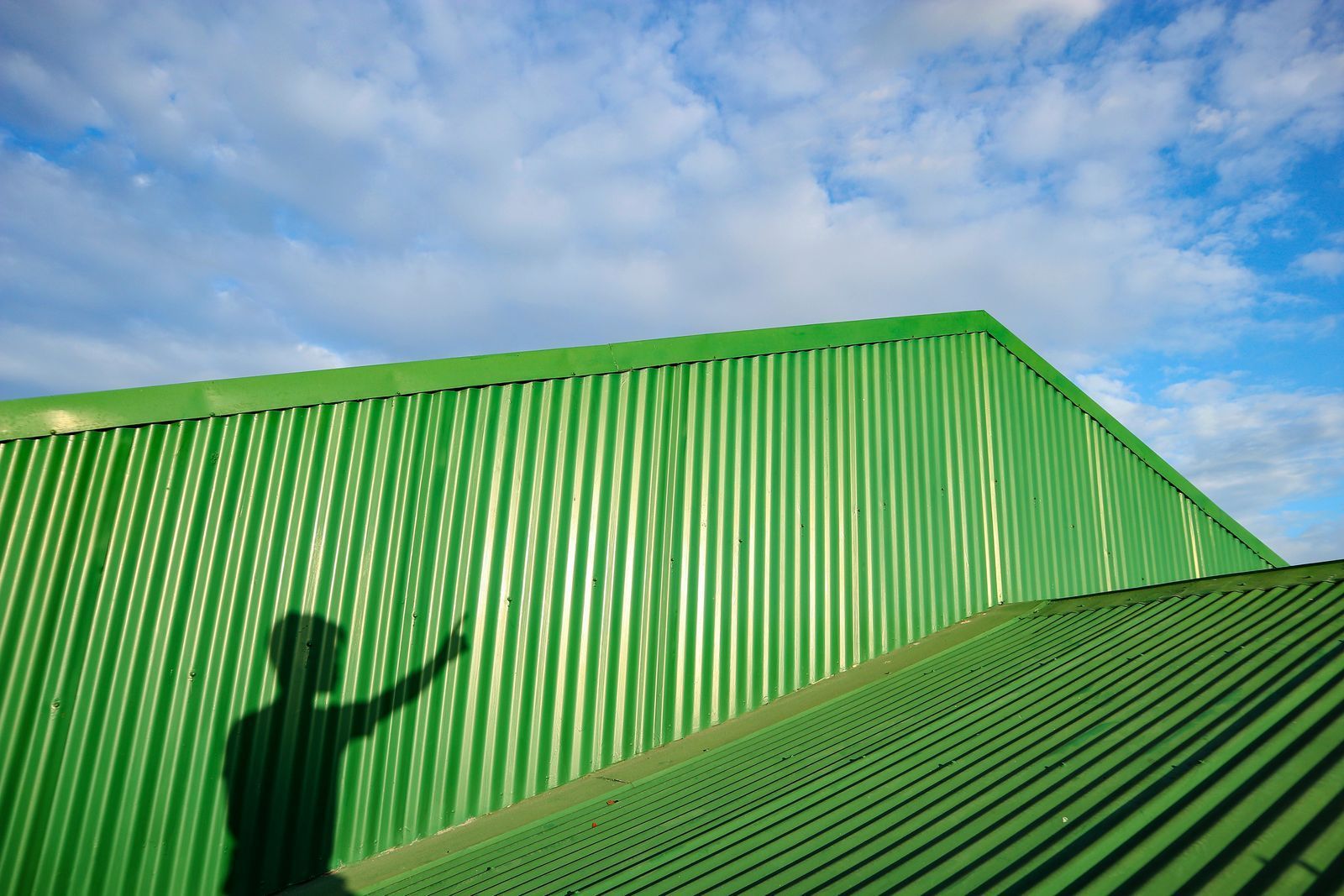
- Timeless Character: That familiar rippled look suits farmhouses, rustic cabins, and modern designs alike, giving a building a distinct, classic appearance that pairs well with wood and stone.
- Fast Installation: Large sheets cover ground quickly, which can shorten project timelines for outbuildings and porch roofs compared with materials installed piece by piece, so your building is usable sooner.
- Weather Resistance: Properly lapped and fastened panels shed heavy rain efficiently, and coated finishes help limit corrosion in the humid conditions that Georgia buildings face year after year.
- Recyclable Material: Steel roofing panels can typically be recycled at the end of their service life, and replacing an old metal roof often allows the removed sheets to be recovered as well.
Our Corrugated Roofing Installation Steps
- Structure check: We inspect rafters, purlins, or decking, confirm spacing and condition, and measure each roof plane so panels can be ordered at lengths that reduce end laps.
- Underlayment and trim: On enclosed buildings, underlayment is installed over the deck, and eave trim and closures are set to block insects, birds, and wind driven rain.
- Panel layout: Sheets are placed starting opposite the prevailing wind, squared to the eave, and lapped by the proper number of corrugations so water flows away from each seam.
- Fastening: We drive gasketed screws in the correct pattern and depth, snug enough to seal the washer without crushing it, so each fastener stays watertight through heat and cold.
- Ridge and finish: Ridge caps, foam closures, and gable trim are installed, scrap metal and screw shavings are cleared from the panels, and the finished roof is checked for gaps.
Panel Gauges, Coatings, and Care
Corrugated panels are available in several steel gauges, with thicker panels generally resisting dents and spanning wider purlin spacing better than lighter sheets. Galvanized steel uses a zinc coating, while galvalume combines aluminum and zinc and is often chosen for improved corrosion resistance. Painted finishes add color options and an extra protective layer, and lighter colors may reflect more summer heat depending on the coating. Because corrugated panels rely on exposed fasteners, the rubber washers age over time and may need inspection or replacement after years of sun and temperature swings. Condensation is another consideration in barns and shops, where an underlayment, vapor barrier, or insulation layer can help reduce dripping. Simple maintenance, such as removing leaves from laps, keeping dissimilar metals like copper from contacting the panels, and checking screws after high winds, helps a corrugated roof perform well for many seasons.
Why Our Corrugated Roofs Stay Tight
- Superior Quality Craftsmanship on corrugated metal starts with straight, square panel runs. When the first sheet is set true to the eave, every lap that follows lines up properly, giving your barn, shop, or home a clean wave pattern that sheds rain without gaps.
- Seamless and Stress-Free Experience means we work around livestock, equipment, and daily routines on farms and residential lots. We stage panels carefully, keep driveways and work areas open, and pick up every scrap and screw before we pack the trucks.
- Clear and Consistent Communication helps you choose the right gauge, finish, and color for your building. We explain how exposed fastener panels age, what upkeep to expect, and when solid decking or underlayment is worth adding for condensation control.
- Precision in Every Detail shows in fastener work. Every screw is driven straight and seated at the right depth, so washers seal without splitting, because overdriven or crooked fasteners are a leading cause of leaks on corrugated metal roofs.
20+ Years of Roofing Experience
Residential and Commercial
Available 24/7
Based in Athens, GA
Corrugated Metal Roofs in Athens and Beyond
We install corrugated metal roofing for farms, homes, and businesses in Athens, GA and throughout Northeast Georgia, the Greater Atlanta area, and other parts of the state. Customers reach out about metal roofing in Athens, GA, barn and shop roofs around Newnan, GA, and porch or carport panels in Stonecrest, GA. Rural sites and larger outbuildings may need extra planning for panel delivery and access, so contact us to confirm availability for your location before setting a start date.
Related Services
Corrugated panels are just one metal option. Compare them with other systems in our roofing services overview, find quick answers on our roofing FAQ, or get a corrugated roofing estimate for your barn, shop, porch, carport, or home.
FAQS
Questions Property Owners Ask Us
Straight answers about this service, the work involved, and what to expect. You can find more on our roofing FAQ page.
Should corrugated metal go over purlins or solid decking on my building?
How do I stop condensation dripping under the corrugated roof on my shop?
Is galvanized or galvalume corrugated metal better for a Georgia barn?
Can corrugated metal panels be installed over an old shingle roof?
Get Started Today
Get Your Free Roofing Estimate
Rodriguez Metal and Roofing serves Athens, GA and the Greater Atlanta area. Tell us about your roof or siding project and we will walk you through clear, honest options.
Available 24/7 · Email: sales@rmroofing.net